
Sparkling Wines
“Actually, it’s only quarantine if it comes from the quarantine region of France;
otherwise, it’s just sparkling isolation. ”
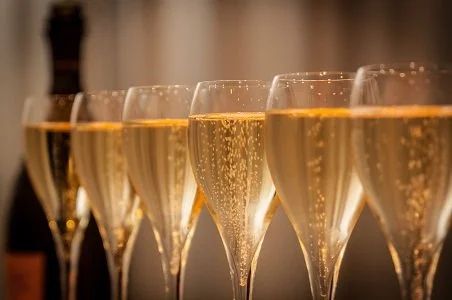
We love bubbles… you love bubbles… everyone loves bubbles! We feel that sparkling wines are some of the most versatile, food-friendly wines on the planet, and have a place in every wine cellar, shop, and list. Some are perfect apertifs, with their brilliant acidity and refreshing sparkle, others are perfect food pairing wines, where the sparkle cleanses the palate throughout the meal. Brunch, a mid-afternoon glass, and apertif wine through midnight toast… what’s not to like? And with their clean, focussed flavors, sparkling wines are often some of a regions very best expressions of the characteristics of their terroir. We offer a range of sparkling wines from many of the world’s great wine areas, from a fun-filled, deep-red Aussie shiraz through compelling and distinctive Grand Cru grower Champagnes.
One of the great joys of exploring the world of wine is touring through the diverse array of sparkling wines, from the traditions of Champagne to the exciting “old meets new” world of Pet-Nat wines. Bubbles aren’t just for celebration (although they’re great for that) - they also lift and awaken the palate, making dry ones perfect apertif wines. During the meal, sparkling wines cleanse and refresh the palate, making the other paired flavors jump, and at the end of the meal, a sweeter sparkling wine can lift a dessert right off the plate. Explore with us, and enjoy!
Good-quality sparkling wines are mostly made by one of three methods:
Methode Ancestrale - Bubbles retained by completing the primary fermentation in the bottle: This of course means that the yeast causing the fermentation is also in the bottle. These “Naturally Petillant” (ie PetNat) wines are usually just lightly sparkling- 1/3 to 1/2 that of a Champagne, and usually a bit cloudy, not unlike a hazy IPA.
Methode Charmat - Bubbles created by a secondary fermentation in a pressurized tank: The grape juice is fermented into a regular “still” wine, clarifed, and then it is placed in a tank with added unfermented juice and yeast. The secondary fermentation creates the sparkle, and the wine is then filtered and bottled under pressure so that the final product is sparkling. The main good-quality representation of this style is Prosecco, along with some German/Austrian Sekts.
Methode Traditionelle (Methode Champenoise) - Bubbles created by a secondary fermentation in the bottle: The wine is produced in cask or tank as a still wine, then transferred to the bottle where a small amount of unfermented juice and yeast is added to produce the sparkle. This secondary fermentation is a slow process, which allows the carbonation to more fully integrate into the wine, creating finer, longer lasting bubbles. Key to this process is the “remuage”- the careful removal of the yeast to leave a crystal-clear wine. Pioneered by the Widow Cliquot in Champagne, the Methode Champenoise is now used as well in Cava, in Franciacorta, for the best California sparkling wines, and to make the finest sparkling wines in many other regions around the world.
There are actually four other methods in use, but they are of lesser importance in the world of good quality sparkling wines:
Dioise Method- used for Clairette de Die in the Rhone Valley - the primary fermentation is arrested by cooling, then the wine is transferred without dosage to the bottle for a “semi-secondary” fermentation- really a completion of the primary. Also used for the Asti Spumanti produced in the village of Cannelli in Italy.
Transfer Method- primary in cuve, then transfer to bottle for secondary, then back to a tank for blending, filtering and final dosage, then back to a second bottle for final packaging. Crazy talk, but it does eliminate the chance of bottle-to-bottle variation.
Continuous Method- very industrial method of vinification and clarification under pressure. Nasty Soviet-era bubbles for washing down the single dried out sausage you waited 4 hours in line to buy. Never made it past the Curtain.
Soda Method- make regular wine, inject CO2. Yuck.
Sweetness levels in sparkling wines
Sparkling wines are unique in the world of quality in that the final sweetness is adjusted just before final bottling. From Brut Zero (Brut Nature) at an utterly dry 0% residual sweetness to dessert bubbles in the 15% sweetness (sugar by weight) there is a huge range. Click here for more info on sweetness levels.
Our Producers
Terroir Wines represents a vast range of sparkling wine producers from most of the major European producers of bubbly. Whether it’s a classic Champagne you’re looking for, or a rare single-vineyard Prosecco, or bubbles to go into a Spritz or French-75, we’ve got you covered!
France
Champagne Le Brun de Neuville (Methode Champenoise)
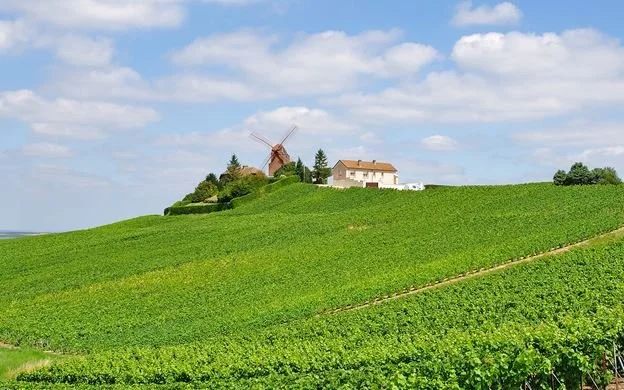
Champagne- The Abbey of Hautvillers
Austria
Stift-Klosterneuberg Gruner Veltliner Brut NV (Methode Charmat)
Hermann Moser “Rosi Mosi” Zweigelt Rose Extra Dry (Methode Charmat)
Hungary
Affinitas Tokaj Brut NV (Methode Champenoise)
Italy
Friuli- Ronco Margherita Ribolla Gialla Brut (Methode Charmat)
Friuli- Ronco Margherita Prosecco Rosato Millesime (Charmat)
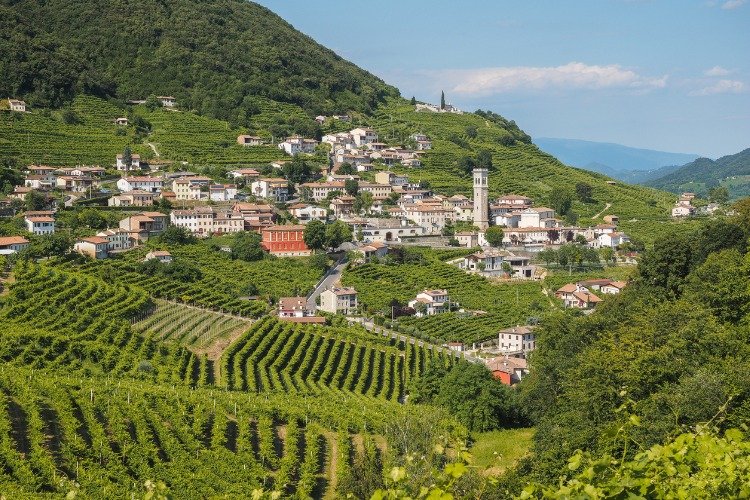
Prosecco- the Village of Valdobbiadene
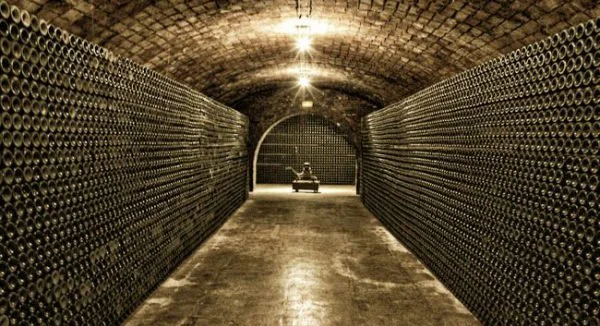
Cava-= Cellars at Friexenet
Detail 3
Maecenas non leo laoreet, condimentum lorem nec, vulputate massa. Suspendisse nec congue purus.
Detail 4
Donec eget risus diam. Nullam sit amet nisi condimentum erat iaculis auctor.